

You're Always At Home With Refind Realty.
Serving Your DFW Real Estate Needs Since 2005.
We Help You Buy and Sell in The Greater Dallas-Fort Worth Area.
Check Out Our Social Media Channels!
Buying in DFW
Buying your first or next home should be a rewarding and exciting time in your life, and one that you look back on with fond memories.
Thinking Of selling?
The market has changed a lot and I'd love to show you the exact strategy I use to get sellers in DFW top dollar for their property.
Get Pre-Approved
Let me walk you through the entire pre-approval process so you know exactly how much home you can afford.


Sign Up For my
Email List
My emails are a great way to stay up-to-date with local news and real estate market trends, even if you're not currently in the market. So, come on and join me to stay in the loop!
affordability Calculator
Get pre-approved to know exactly how much house you can afford. Use this calculator to get a quick estimate. Contact me for assistance!
DFW New Construction
Discover the latest new home constructions in DFW and take advantage of the builder incentives that are available now.
Newest Listings
Call Me Today At (713) 505-2280

Refind Realty Blog:


How to Meet Your Builder’s Deadlines in DFW | Refind Realty DFW
How to Meet Your Builder’s Deadlines Without Rushing Decisions in DFW

Direct Answer
To meet your builder’s deadlines in Dallas–Fort Worth without rushing decisions, you need pre-planning, structured selection timelines, upfront clarity on allowances, and a strong communication rhythm with the builder.
The fastest way to avoid stress is to organize your choices before your design appointment and understand exactly which selections impact structural deadlines, budget, and build time.
Smart preparation lets you stay on schedule, protect your pricing, and still make intentional, high-quality decisions.
1. Understand the Builder Timeline Before You Sign Anything
Every DFW builder uses a different schedule.
Typical phases:
Structural selections → must be locked early
Design center selections → flooring, tile, cabinets
Electrical layout → lighting, outlets, smart-home choices
Pre-construction meeting → final confirmation
Before you commit, request:
A written deadline calendar
A list of structural items that freeze early
The date when pricing locks
Milestones that can’t be changed later
Clarity reduces urgency and protects your decision-making pace.
2. Prep Your Must-Have List Before the Design Center Visit
Going into the design center without prep = overwhelm.
Create three lists:
✔ Must-Haves
Non-negotiables that define your home’s value and livability.
Examples: ceiling height, upgraded kitchen layout, structural changes.
✔ Nice-to-Haves
Design upgrades that enhance resale but aren’t essential.
Examples: accent tile, upgraded hardware, premium carpet.
✔ Don’t Need / Low Impact
Avoidable upsells that don’t add real value.
Examples: low-impact tech packages, trendy tile accents, builder add-ons with cheap alternatives.
A prioritized list removes pressure and keeps you confident.
3. Gather Inspiration Early (3–4 Weeks Before Selections)
You should enter your design meetings with visual clarity, not guesswork.
Suggested prep:
Visit finished inventory homes
Tour model homes again
Create a small inspiration board
Save photos of kitchens, bathrooms, colors
Note flooring transitions you love or hate
Look at real resale listings to see what’s holding value
You’re not making choices early — you’re narrowing the field.
4. Request Allowance Sheets Upfront
One of the biggest sources of rushed decisions?
Not knowing the true cost of upgrades.
Ask your builder for:
Flooring allowance
Cabinet allowance
Electrical upgrade pricing
Structural upgrade menu
Any required upgrades (e.g., venting, code items)
When you know your numbers early, you’ll make smarter, slower decisions later.
5. Lock Your Structural Choices First (And Don’t Second-Guess)
Structural decisions are the fastest-moving deadlines:
Extended patios
Bay windows
Additional bedrooms
Media rooms
Ceiling height
Sliding doors
These often lock within 7–14 days.
They also have the biggest impact on your resale value.
Tip: Don’t treat structural choices like cosmetic ones.
Once they’re locked, move on confidently.
6. Break Your Design Choices Into Micro-Decisions
Instead of walking into the design center and facing 300+ choices, break it down:
Kitchen
Cabinet color
Countertops
Backsplash
Hardware
Faucet
Flooring
Bathrooms
Tile
Counters
Fixtures
Layout upgrades
Whole Home
Flooring
Paint
Lighting
Decision batching = zero overwhelm.
7. Avoid Rushed Choices by Asking for “Hold Items” When Allowed
Some builders let you temporarily place certain items “on hold” until:
You see samples in natural lighting
You review pricing
Partner/spouse approves
You compare alternatives
This doesn’t extend deadlines — it gives you space to think.
Ask early if this option exists.
8. Have Weekly Check-Ins with Your Builder or Sales Rep
Communication keeps your build on pace.
Suggested rhythm:
Sunday/Monday: Review progress, confirm decisions
Mid-week: Ask about upcoming deadlines
End of week: Prep any decisions needed for next week
This prevents last-minute surprises — the #1 cause of rushed choices.
Conclusion
In DFW new construction, buyers don’t need to feel rushed — they just need structure. When you understand your builder’s timeline, prepare your decisions ahead of schedule, and communicate consistently, you’ll meet every deadline confidently while still building the home that fits your vision.
If you want help navigating builder timelines, design centers, or structural decisions, I’m here to guide you through every step.
📈 Check Your Home Seller Score
📅 Book Your Home Goals Consultation
🏡 Explore DFW New Construction Homes
Key Takeaways
Builder timelines vary — get them in writing.
Prep your must-have list before visiting the design center.
Gather inspiration early to avoid pressure later.
Know your allowances upfront to avoid rushed budget decisions.
Structural choices lock fast — prioritize them first.
Break decisions into smaller categories to reduce overwhelm.
Weekly check-ins prevent deadline surprises.
Custom HTML/CSS/JAVASCRIPT

Stay Informed With My Downloadable
Buyer and Seller guides

6 Smart Ways to Build Home Equity

7 Insider Secrets To Selling Your Home w/o a Lot of Time or Money

DFW Home Seller Negotiation Secrets
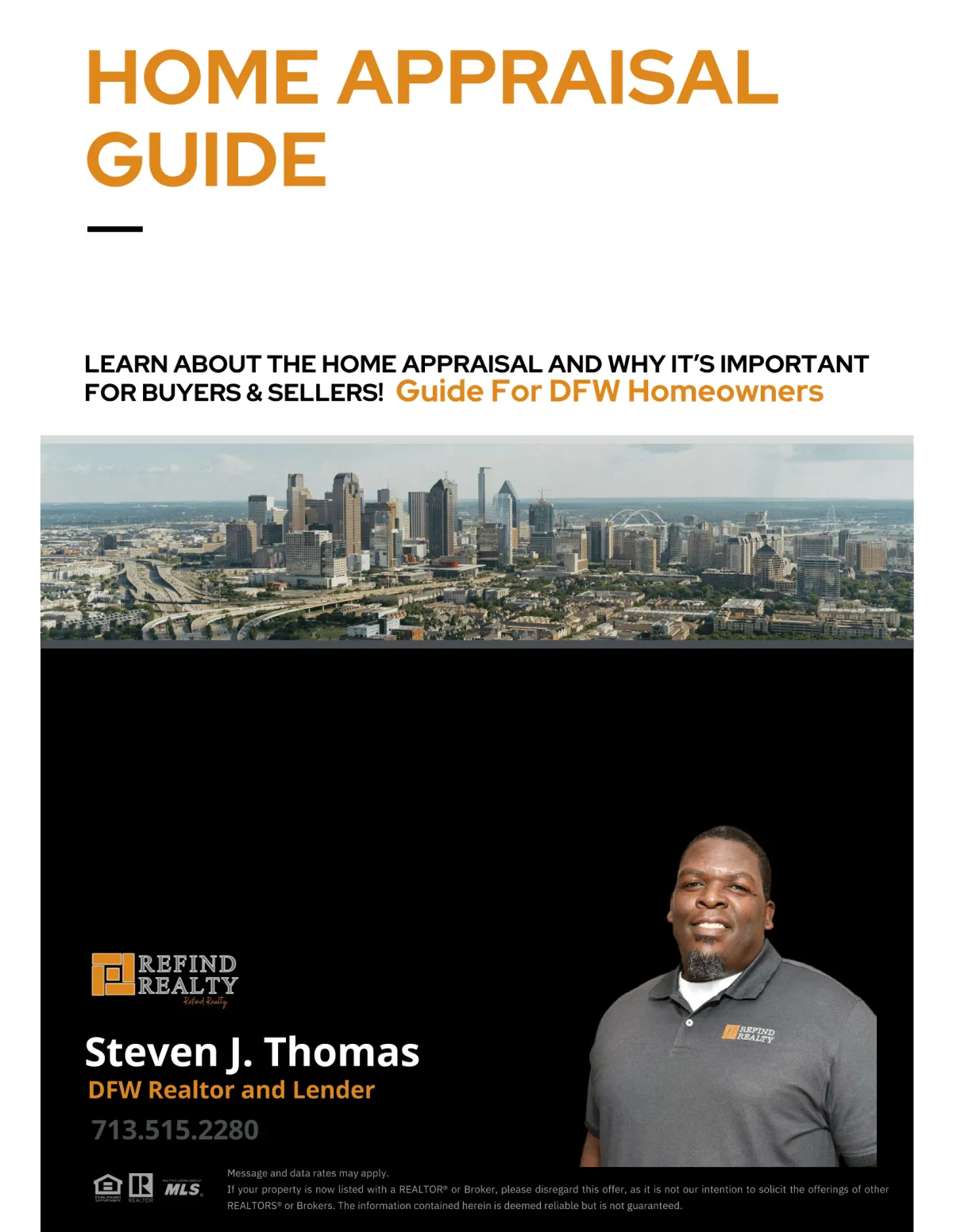
Home Appraisals Guide

Avoiding Pitfalls That Can Derail Your Home's Sale

Ultimate Guide To Buying a Home

A First Time Homebuyers Guide In DFW

Are You Ready To Buy?

25 Insider Secrets To Buying A Home

How to Improve Your Credit
Download All My Guides For Free
Unable to find form
(I'll send you all 10)

Refind Realty DFW
50+ 5 Star Reviews
Over $90,000,000 in Total Real Estate Sales
267+ Properties Sold

Wondering What Your DFW Home Could Be Worth in 2024?
Get a Professional Home Valuation From A Local Market Expert
Unlock insights into potential selling prices.
Get a personalized analysis sent directly to your inbox.
Stay ahead with updates on property value fluctuations.
Benchmark your property against neighborhood listings.
Get a FREE Home Valuation And Potential Net Sheet:
Unable to find form


Mr. Thomas real-estate company performed a outstanding job handling my transaction in buying my beautiful new home. I would recommend him to all my family and friends in the future.
{user.name}}


Steven was very knowledgeable about the questions I had and very attentive to my needs and wants of buying a house. His approach was as if he was buying the house for himself. That led me to trust his knowledge and expertise. Thomas for your next purchase of a home. He also worked with me every step of the process and helped me to understand and that made it less stressful In buying a home. I highly recommend Refind Realty and Steven On your first or next purchase. I start 2024 with a new build house with equity going in the door. Thank you Steven
{{user.name}}
Steve did a great job helping during this journey he was very communicative with everything and his response time was very quick every time we had a question. I really recommend him and his office to everyone who want any real state services.
{{user.name}}
Ask Us Anything
Frequently Asked Questions
Why do you need a Realtor?
When buying or selling a home, there are so many options…which can also present a lot of obstacles. Laws change, forms change, and practices change all the time in the real estate industry. Because it’s our job to stay on top of those things, hiring a realtor reduces risk, and can also save you a lot of money in the long run.
When you work with me as your Realtor, you’re getting an expert who knows the area; knows how to skillfully guide your experience as a seller or buyer; can easily spot the difference between a good deal and a great deal. My job is to translate your dream into a real estate reality, and I work hard to earn and keep my business. This also means earning your trust: When you work with me, you’ll be working with a realtor who looks out for your best interests and is invested in your goals.
Which loan should you choose?
There are two different types of loans conventional loans and government-backed loans. The main difference is who insures these loans:
1 - Government-backed loans (FHA, VA and USDA):
(a) - Are, unsurprisingly, backed by the government.
(b) - Include FHA loans, VA loans, and USDA loans.
(c) - Make up less than 40 percent of the home loans generated in the U.S. each year.
2 - Conventional loans
(a) - Are not backed by the government.
(b) - Include conforming and non-conforming loans (such as jumbo loans).
(c) - Make up more than 60 percent of the loans generated in the U.S. each year.
What is the difference between FHA, VA and USDA loans?
1 - FHA LOANS:
FHA loans, which are insured by the Federal Housing Administration, are typically designed to meet the needs of first-time homebuyers with low or moderate incomes. FHA loans can be approved with a down payment of as little as 3.5 percent and a credit score as low as 580.
FHA loans are often called “helper loans,” because they give a leg up to potential borrowers who may not be able to secure one otherwise. For this reason, FHA loans have maximum lending limits, which are determined based on housing values for the county where the for-sale home is located.
Because the agency is taking on more risk by insuring FHA loans, the borrower is expected to pay mortgage insurance both at the time of closing and on a monthly basis, and the property must be owner-occupied.
2 - VA LOANS:
VA loans are backed by the Department of Veterans Affairs and they are guaranteed to qualified veterans and active-duty personnel and their spouses. VA loans can be approved with 100 percent financing, meaning VA borrowers are not required to make a down payment.
Unlike FHA loans, borrowers do not have to pay mortgage insurance on VA loans.
3 - USDA LOANS:
You may also hear about USDA loans, which are backed by the United States Department of Agriculture mortgage program. USDA loans are intended to support homeowners who purchase homes in rural and some suburban areas. USDA loans do not require a down payment and may offer lower interest rates; borrowers may have to pay a small mortgage insurance premium in order to offset the lender’s risk.
What’s a conventional loan? Understanding what it means to be conforming and non-conforming
Buyers who have a more established credit history and a larger down payment may prefer to apply for a conventional loan. These loans may offer a lower interest rate and only require the home buyer to purchase monthly mortgage insurance while the loan-to-value ratio is above a certain percentage, so a conventional loan borrower can typically save money in the long run.
Conventional loans are divided into two types: Conforming loans and non-conforming loans.
1 - CONFORMING LOANS:
Conforming loans are those that meet (or conform to) predetermined standards set by Fannie Mae and Freddie Mac — two government-sponsored institutions that buy and sell mortgages on the secondary market. By selling the loans to "Fannie and Freddie," lenders can free up their capital and return to issue more mortgages than if they had to personally back every loan that they approve.
The main standard for conforming loans is that the amount borrowed must be under a certain amount; in Alaska, a single-family home loan must be under $647,200 in order to be considered conforming.
Properties with more than one unit have higher limits.
2 - NON-CONFORMING (JUMBO) LOANS:
But what happens if a borrower wants to borrow more than the Freddie- and Fannie-approved loan amount? In this case, they would have to apply for a “jumbo loan,” which is the most common type of non-conforming loan.
Because the lender cannot resell the jumbo loan (or any non-conforming loan) to Freddie Mac or Fannie Mae, jumbo loans are considered to be riskier than a conforming loan. To protect against this risk, the bank will typically require a higher down payment; the interest rate on a jumbo loan may also be higher than if the same borrower applied for a conforming loan.
What kind of rate should you choose?
Rate types: Fixed-rate vs. adjustable-rate mortgages.
In addition to the loan type you choose, you’ll also have to determine if you want a fixed-rate mortgage or an adjustable-rate mortgage (ARM). A fixed-rate mortgage has an interest rate that does not change for the life of the loan, so it provides predictable monthly payments of principal and interest.
An adjustable-rate mortgage typically offers an initial introductory period with a low-interest rate. Once this period is over, the interest rate adjusts periodically, based on the market index. The initial interest rate on an ARM can sometimes be locked in for different periods, such as one, three, five, seven, or 10 years. Once the introductory period is over, the interest rate typically readjusts annually.
Office 1229 E. Pleasant Run Ste 224, DeSoto TX 75115
Call :(713) 505-2280
Email: [email protected]
Site: www.stevenjthomas.com
Facebook
Instagram
X
LinkedIn
Youtube
TikTok